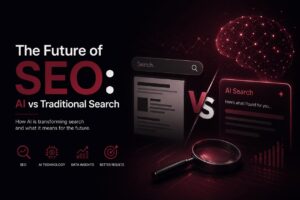
The Future of SEO: AI vs Traditional Search
Introduction
Search Engine Optimization (SEO) has been the foundation of digital marketing for over two decades. Businesses have relied on search engines like Google to connect with customers through high-quality content, keyword optimization, and technical improvements. However, the rise of Artificial Intelligence (AI) is changing the way people search for information. AI-powered platforms such as ChatGPT, Google AI Overviews, Gemini, and other intelligent assistants are delivering direct answers instead of simply displaying a list of web pages. As a result, digital marketers must adapt their strategies to stay visible in this evolving search landscape.
Search Engine Optimization (SEO) has been the foundation of digital marketing for over two decades. Businesses have relied on search engines like Google to connect with customers through high-quality content, keyword optimization, and technical improvements. However, the rise of Artificial Intelligence (AI) is changing the way people search for information. AI-powered platforms such as ChatGPT, Google AI Overviews, Gemini, and other intelligent assistants are delivering direct answers instead of simply displaying a list of web pages. As a result, digital marketers must adapt their strategies to stay visible in this evolving search landscape.
Traditional SEO focuses on improving a website’s visibility on search engine results pages (SERPs). The goal is to rank as high as possible for relevant keywords so users click through to your website. Successful SEO relies on several key elements, including keyword research, high-quality content, on-page optimization, technical SEO, mobile responsiveness, page speed, backlinks, and user experience.
For many years, these practices have helped businesses increase organic traffic, generate leads, and build online authority. While these principles remain valuable, the way users access information is rapidly changing.
The Rise of AI Search
Artificial Intelligence is transforming search into a more conversational and personalized experience. Instead of browsing multiple websites, users can now ask complex questions and receive detailed answers instantly. AI-powered search tools understand context, summarize information from multiple trusted sources, and provide recommendations based on user intent.
This shift means that users may not always visit a website after searching. Instead, they often receive the information directly from AI-generated responses. As AI continues to evolve, businesses must create content that is not only optimized for search engines but also easy for AI systems to understand and reference.
AI Search vs Traditional Search
Although both approaches aim to help users find information, they work differently.
Traditional search presents users with a ranked list of websites, requiring them to choose and explore multiple sources. AI search, on the other hand, generates direct answers by analyzing information from various reliable sources. While traditional SEO focuses heavily on keyword rankings, AI search places greater importance on content quality, accuracy, expertise, and context.
Rather than replacing SEO, AI is expanding it into a broader strategy where helpful, trustworthy, and well-structured content becomes even more important.
How SEO Is Changing
The future of SEO is shifting from keyword-focused optimization to user-focused content. Search engines and AI platforms increasingly reward websites that provide genuine value and answer users’ questions clearly.
To succeed in this new environment, marketers should.
- Create original, informative, and trustworthy content.
- Answer real user questions naturally.
- Organize content with clear headings and logical structure.
- Demonstrate expertise through accurate and well-researched information.
- Improve website speed, mobile usability, and overall user experience.
- Regularly update content to keep it relevant.
- These practices help improve visibility across both traditional search engines and AI-powered search experiences.
Challenges for Digital Marketers
The rise of AI search also introduces new challenges. Since users often receive answers without clicking a website, businesses may experience fewer organic clicks. Competition is increasing as AI favors authoritative and reliable sources. Marketers must also focus on building brand credibility, creating unique content, and maintaining consistent quality to stand out.
Instead of chasing search rankings alone, businesses should aim to become trusted sources of information that both users and AI systems recognize.
The Future of SEO
SEO is not disappearing—it is evolving. Traditional optimization techniques such as technical SEO, keyword research, and quality backlinks will continue to play an important role. However, future success will depend on combining these practices with AI-friendly content strategies.
Digital marketers who focus on creating valuable content, demonstrating expertise, and understanding user intent will be better positioned to succeed in the age of AI. As search continues to become smarter, the brands that prioritize quality, trust, and user experience will remain competitive.
Conclusion
The future of SEO lies in balancing traditional optimization with AI-driven search strategies. While search engines continue to evolve, the core objective remains the same: providing users with accurate, relevant, and valuable information. Businesses that embrace AI while maintaining strong SEO fundamentals will be well prepared for the next generation of digital marketing. By adapting to these changes today, marketers can build long-term visibility, credibility, and sustainable online growth.