Generative Engine Optimization (GEO): The New SEO Strategy for 2026
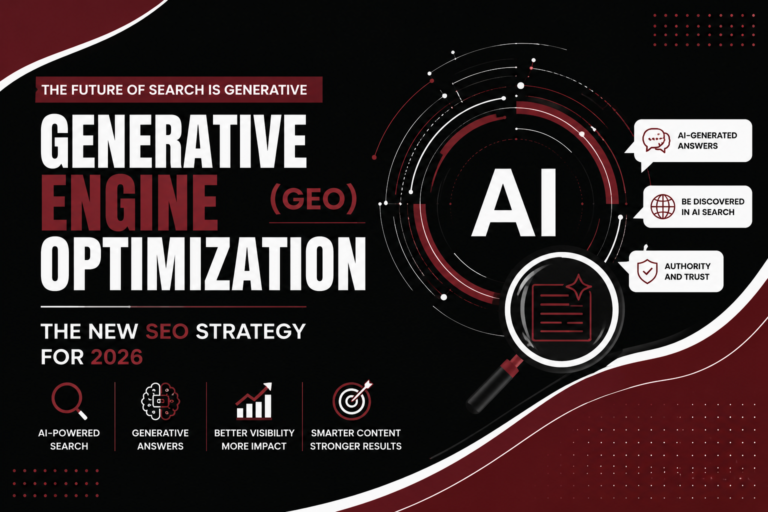
Search is changing faster than ever. People are no longer relying only on traditional search engines like Google to find information. They are increasingly using AI-powered platforms such as ChatGPT, Google Gemini, Microsoft Copilot, and other generative AI tools to get direct answers to their questions.
This shift has created a new opportunity for digital marketers: Generative Engine Optimization (GEO).
GEO is becoming an important digital marketing strategy in 2026 because brands now need to optimize their content not only for traditional search engine rankings but also for visibility in AI-generated answers.
What Is Generative Engine Optimization?
What Is Generative Engine Optimization?Why Is GEO Important in 2026?
AI is changing the way people discover information, products, services, and brands. Search is becoming more conversational, personalized, and answer-focused.
For digital marketers, this means simply ranking on the first page of Google may no longer be the only goal.
GEO can help businesses:
- Increase visibility in AI-generated answers
- Build brand authority
- Reach users during conversational searches
- Improve the discoverability of useful content
- Support long-term search visibility
- Adapt to the changing search landscape
The goal is not to replace SEO. Instead, GEO works alongside traditional SEO.
GEO vs Traditional SEO
traditional SEO focuses on factors such as keywords, backlinks, technical optimization, website structure, and search rankings.
GEO focuses more heavily on whether content provides clear, accurate, trustworthy, and useful information that AI systems can understand and potentially incorporate into their responses.
However, the two strategies overlap significantly.
A strong GEO strategy still benefits from:
- High-quality content
- Clear website structure
- Relevant keywords and topics
- Strong authority and credibility
- Good user experience
- Technical SEO
- Reliable sources
In simple terms, SEO helps people find your website, while GEO aims to make your content useful to AI-powered discovery systems as well.
How to Optimize Content for GEO
1. Create High-Quality, Helpful Content
AI systems need reliable information. Instead of creating content only to target keywords, focus on answering real questions and solving genuine problems.
Your content should provide practical information that users can easily understand.
2. Answer Questions Clearly
Use clear headings, short paragraphs, bullet points, and direct answers.
For example, if your heading is “What is SEO?”, provide a simple and direct explanation immediately below it.
This makes your content easier for both users and search systems to understand.
3. Demonstrate Expertise and Trust
Credibility is becoming increasingly important. Include accurate information, relevant examples, data, expert opinions, and trustworthy references when appropriate.
A website that consistently publishes useful and reliable information has a stronger opportunity to build authority.
4. Use Natural Language
People communicate with AI tools using conversational questions. Therefore, content should naturally address questions people might ask.
Instead of repeatedly using a keyword such as “digital marketing services,” create content around questions like:
“What digital marketing services does a small business need?”
This creates more natural and useful content.
5. Keep Content Updated
Digital marketing changes rapidly, especially with AI. Old information can quickly become inaccurate.
Regularly updating articles with new statistics, examples, strategies, and developments can help keep your content relevant.
The Future of GEO
GEO is still developing, and the way AI systems select and display information will continue to evolve. However, one thing is becoming clear: search is moving from simply finding links toward receiving direct answers.
For businesses and digital marketers, this creates both a challenge and an opportunity.
The marketers who understand how people search, create genuinely helpful content, establish authority, and adapt to AI-powered discovery will be better prepared for the future.
Conclusion
Generative Engine Optimization is one of the emerging strategies shaping digital marketing in 2026. It does not mean abandoning traditional SEO. Instead, it means expanding the way we think about search visibility.
The future of search will be more conversational, intelligent, and personalized. Businesses that create trustworthy, useful, and well-structured content can improve their chances of being discovered—not only through traditional search engines but also through AI-powered platforms.
For digital marketers, the message is simple:
Don’t just optimize for search engines. Create codeserves to be the answer.ntent that